
Research notes and practical guides

The iveeka Journal

Clear, practical ideas for evaluating products, understanding unit economics and planning a more thoughtful test.

A team discussing product ideas around a table

01 / PRODUCT RESEARCH

Start with the customer problem, not the product

A promising product is easier to evaluate when you can explain who needs it and why.

Read article

A product can look compelling in a feed and still be difficult to sell. Begin by writing down the problem it solves, who experiences that problem and what alternatives people use today.

Then look at the product evidence. Activity, platform and market can help you decide whether an idea is worth a closer look, but they do not replace a clear customer need.

Before testing, make the reasoning concrete: the customer, the problem, the product benefit and the reason to believe. If one of those is missing, that is the next research question.

A notebook and calculator used to review figures

02 / UNIT ECONOMICS

Read the margin before you fall in love with an idea

Use the gap between product cost and selling price as a starting point, not the whole business case.

Read article

Gross margin per unit is the selling price minus product cost. It gives you a quick way to compare products, but it is not net profit.

Advertising, shipping, payment processing, taxes, discounts and returns can all reduce the amount left over. List the costs you know and mark the ones that still need validation.

A good early comparison is not the product with the biggest number. It is the product whose assumptions you understand well enough to test.

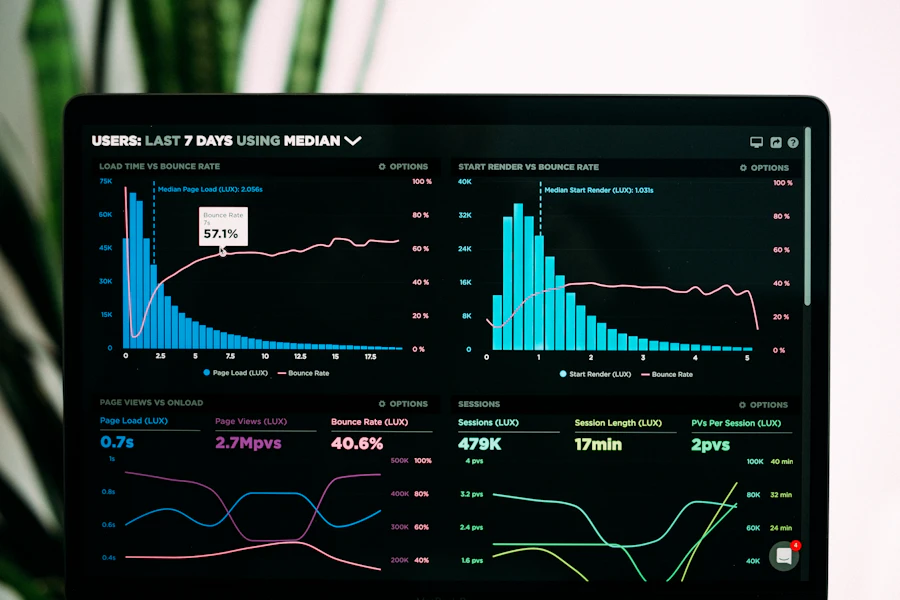
A screen displaying charts and business data

03 / DEMAND SIGNALS

What product activity can - and cannot - tell you

Views and active days are useful context, but they should not be mistaken for confirmed sales.

Read article

Activity can help you notice that a product is receiving attention. It cannot tell you by itself how many people bought it, what it cost to acquire a customer or whether the advertiser made a profit.

Use views and duration as signals for further research. Compare products in a similar category and market, then check the creative, offer and likely audience.

Treat every signal as a question to investigate rather than a guarantee of future performance.

A planner opened beside a laptop on a desk

04 / TEST PLANNING

Build a shortlist you can actually test

A useful shortlist is small enough to compare and specific enough to turn into experiments.

Read article

Save only the products that meet your current criteria. Those criteria might include a customer problem, acceptable unit margin, supplier access and enough evidence to justify a test.

For each candidate, record what you know, what you assume and what result would change your mind. This keeps the shortlist useful when new information arrives.

A shortlist is not a promise to launch. It is a structured way to choose what deserves the next hour of research or the next small experiment.

A customer completing a purchase at a checkout

05 / OFFER STRATEGY

Compare the offer, not just the product photo

The same product can feel very different depending on its audience, bundle and promise.

Read article

When reviewing a product, look at the offer surrounding it. Consider the intended customer, the benefit being emphasized, the price framing and whether the creative makes the value easy to understand.

A bundle, guarantee or demonstration may explain why one presentation attracts attention while another does not. These details are often as important as the object itself.

Use competitor offers as research, then develop an honest offer for your own customer rather than copying claims without evidence.

A laptop showing a business analytics dashboard

06 / SCENARIO ANALYSIS

Use conversion scenarios as guardrails, not forecasts

A range of assumptions is more honest than a single precise-looking revenue estimate.

Read article

Scenario estimates combine assumed views, conversion rates and unit margin. They are useful for seeing how sensitive an idea is to different assumptions.

They are not a forecast unless they are grounded in reliable historical data and validated against actual results. Keep the conversion rate visible and remember to account for advertising and operating costs separately.

Use a conservative case to ask whether the idea is still worth exploring if results are weaker than hoped. Then design a small test that can replace assumptions with evidence.

A small team reviewing creative work together

07 / CREATIVE REVIEW

A simple checklist for reviewing product creatives

Look for a clear opening, visible product benefit and a believable demonstration.

Read article

First, identify the opening: what makes someone stop? Next, check whether the product and its intended benefit are clear without requiring a long explanation.

Look for a demonstration, proof point or context that helps a customer understand how the product fits their life. Notice the call to action and whether the offer matches the message.

A creative that attracts attention still needs a relevant audience and a viable offer. Review these elements together rather than treating views as the only measure of quality.